
If you've had gum disease before, dental implants might still be possible. You'll need to get any infection under control and make sure your mouth is stable first.
With careful evaluation, targeted treatment, and real commitment to long-term care, you can become a candidate for implants and lower your risk for problems like peri-implantitis.
Let's break down how a history of gum disease changes your implant risk, the checks and treatments your dentist will use to prep your mouth, and which techniques can boost implant success—like bone grafting, if that's on the table. We'll also look at what it takes to protect your investment over the years, including options like full mouth dental implants in Greenville, SC for those who need a more comprehensive restoration. Hopefully, you'll come away with better questions to ask your dental team and a sense of what's realistic.
.
Understanding the Impact of Gum Disease on Dental Implants
A history of gum disease changes how your dentist thinks about risk, plans surgery, and cares for implants long term. You’ll need a focused look at your gum and bone health, maybe some extra treatment, and a maintenance plan that isn’t just a suggestion.
How Gum Disease Affects Implant Candidacy
If you’ve got active gum infection, you can’t get implants right away. Bacteria and inflamed tissue mess with healing and osseointegration.
Your dentist will want to see controlled inflammation, shallow probing depths (usually 4 mm or less), and no bleeding when they check your gums.
Lost bone from periodontitis? Bone grafting or ridge augmentation may be on the agenda to get enough support for the implant.
They’ll use imaging (CBCT) to measure bone volume and quality. If you’re low on bone, that changes the plan, the cost, and even the odds of success.
Things like smoking, uncontrolled diabetes, or poor oral hygiene can push back your candidacy until you’ve got them handled. If you’ve had solid periodontal treatment and keep up with maintenance visits, your chances improve.
Differences Between Healthy and Compromised Gums
Healthy gums around implants look pale pink, feel firm, and barely bleed when probed. You’ll see probing depths around 2–3 mm and no pus.
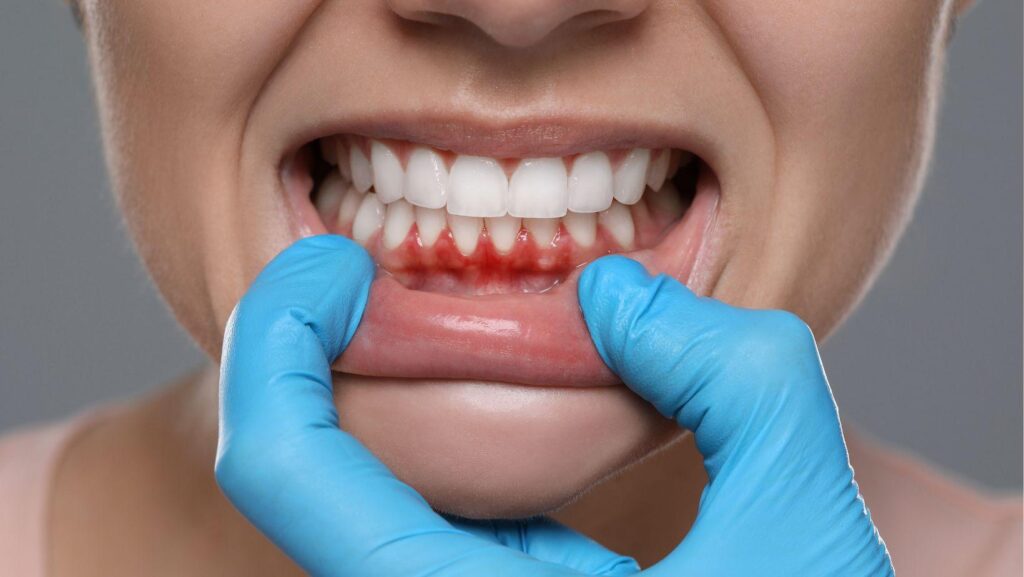
Gums affected by past periodontitis can look red, show recession, have deeper pockets, and bone loss that’s all over the place.
These conditions give bacteria more places to hide, and cleaning around implants gets trickier.
You might notice more bleeding on probing, lots of plaque, and uneven gum lines. Your dentist might suggest connective tissue grafts or soft-tissue contouring to help with looks and make cleaning easier if your gums are thin or receded.
Risks of Implant Failure Due to Periodontal History
If you’ve had gum disease, your risk for peri-implant mucositis and peri-implantitis is higher. These are inflammations that can eat away at bone around the implant and, if ignored, lead to implant failure.
Numbers don’t lie—complication rates are higher for folks with a history of gum disease.
But if you’ve had good periodontal therapy and stick to a strict maintenance schedule, you can bring that risk way down.
Dentists usually recommend regular cleanings, solid at-home plaque control, and checkups every 3–4 months.
If infection comes back, treatment might include deep cleaning, antiseptics, antibiotics, or sometimes surgery with regenerative techniques.
How your implant holds up over time depends on getting the disease under control in the first place—and sticking with hygiene and follow-ups.
Pre-Treatment Evaluation and Planning
You’ll need a targeted assessment of your current gum health, detailed imaging of bone and soft tissue, and a plan for any gum therapy before implants.
Good planning matters—it cuts the risk of implant failure and helps your dentist figure out timing, grafting, and maintenance.
Assessing Periodontal Health Prior to Implant Placement
Your dentist will check pocket depths, attachment levels, bleeding, and any pus at every tooth and possible implant site.
They’ll also look for furcation involvement and tooth mobility—these findings tell them if you need extractions, gum therapy, or to space out implant placement.
Radiographs help spot bone loss and root defects that show active gum disease. You’ll need to show infection control—ideally, probing depths at or under 4 mm, barely any bleeding, and stable attachment for at least three months.
They’ll check if you smoke, how your blood sugar looks (if you’re diabetic), any meds that affect healing, and how well you clean your teeth.
All this info helps set realistic timelines and decide if you need antibiotics or other therapies.
Diagnostic Tools and Techniques
Periapical X-rays and CBCT scans help your dentist see bone volume, thickness, and what’s near the area.
CBCT is great for planning implant size and spotting if you’ll need grafting; periapicals help with the fine details of bone defects.
They’ll do a full-mouth gum charting and snap some intraoral photos to track your baseline.
Sometimes, they’ll use study models or digital scans for planning and to check your bite and space.
If regular therapy isn’t working, or there are other health factors, they might use microbial tests or biomarkers.
Occlusal analysis can catch bite issues that might cause bone loss around implants.
Your dentist will lay out a treatment map with the order: gum therapy → reassessment → bone grafting (if needed) → implant placement.
Collaboration With Periodontists
If you’ve got moderate or severe gum disease, complex bone loss, or stubborn inflammation, your dentist will probably refer you to a periodontist before any implant surgery.
You’ll want to coordinate timing—definitive gum stabilization should happen before implants, with a healing period of about 3–6 months depending on the treatment.
Both dentists should agree on goals, share gum charting, X-rays, and a maintenance schedule.
You’ll want to talk about graft materials, membranes, and whether to stage procedures or do them together.
Together, you and your dental team can plan a maintenance routine—professional cleanings, hygiene coaching, and re-evaluations at set points (like 3, 6, and 12 months after your implant is placed).
Treatment Strategies for Improved Outcomes
You’ll need targeted gum therapy before implants, maybe some bone or soft-tissue reconstruction, and implant hardware that fits your risk level and anatomy.
Each step helps cut down on complications and keeps your implants working well over time.
Pre-Implant Gum Disease Therapy
You’ve got to finish active gum therapy and show stable gums before getting implants.
That usually means scaling and root planing, sometimes antibiotics, and then checking your gums again at 4–8 weeks.
You’re aiming for pocket depths of 4 mm or less and minimal bleeding before surgery.
A personalized maintenance plan is key—professional cleanings every three months at first, then adjusted based on your risk factors like smoking or diabetes.
Keeping detailed records—clinical notes, photos, and X-rays—helps guide when to move forward with implants.
Bone Grafting and Soft Tissue Augmentation
Your dentist will use CBCT and clinical checks to see if you need bone grafting.
Guided bone regeneration with different graft materials (autograft, allograft, or xenograft) helps when you’re missing bone needed for proper implant placement.
They’ll pick graft materials and membranes based on defect size, how much stability you need, and your overall health.
If you don’t have enough attached gum tissue, soft tissue grafts (like connective tissue or free gingival grafts) can improve the seal around implants and look better.
For minor defects, they might do grafting and implants at the same visit; bigger reconstructions usually need to be staged.
Selecting Appropriate Implant Systems
Your dentist will match the implant’s design to your bone quality and how much force it’ll need to handle.
Tapered implants and rough surfaces help with stability in softer bone. Platform-switching and smart thread design can help keep bone at the top from shrinking away.
They’ll consider implant width and length based on your available bone.
Short or narrow implants are an option if grafting isn’t possible, but they need precise bite planning.
It’s important to pick prosthetic options and connectors that make cleaning easier (like screw-retained crowns) and let your dentist check the area around the implant.
You should talk with your dentist about what works best for your anatomy, the evidence, and your ability to maintain things long term.
Long-Term Maintenance and Aftercare
You’ll need a solid home care routine and regular dentist visits to keep the implant, gums, and bone healthy.
Consistent cleaning, the right tools, and regular checkups help prevent disease and mechanical issues.
Post-Implant Oral Hygiene Recommendations
Brush twice a day with a soft-bristled brush or one made for implants.
Use a gentle toothpaste so you don’t wear down implant surfaces.
Clean between teeth and around implants daily with implant-friendly floss, a threader, or an interdental brush that fits comfortably.
Pick nylon or soft-bristled heads to avoid scratching anything.
Only use a chlorhexidine mouthwash if your dentist tells you to, and just for short-term use after surgery or a flare-up—using it too long can mess with your mouth’s bacteria.
Some people benefit from an antiseptic gel around the implant, but ask your hygienist first.
If you have bridges or screw-retained prostheses, take out and clean removable parts every day if you can.
Skip metal scalers at home—leave those to the pros. Your hygienist will use plastic or carbon-fiber tools during cleanings to protect your implants.
Don’t forget: quitting tobacco and keeping blood sugar under control are part of keeping your implants healthy too.
Monitoring for Signs of Peri-Implant Disease
Take a look at your implant every day. Watch for redness, swelling, bleeding if you poke it gently, a weird bad taste that sticks around, or any pus.
If your crown feels looser than usual or your bite seems off, don’t wait—let your dentist know right away.
Try to get professional maintenance every 3 to 6 months at first. The exact timing depends on your gum health and how you’re healing.
At these visits, your clinician checks pocket depths around the implant and might take X-rays if they think you’re losing bone. They’ll also keep an eye on any changes in the soft tissue, looking for early signs of trouble like peri-implant mucositis or peri-implantitis.
During follow-ups, they’ll clean the area using non-metal tools. They’ll go over your home-care routine, and if things aren’t improving, they might suggest antimicrobials or refer you for surgery.
It’s a good idea to jot down any symptoms you notice and keep track of your appointments. This helps you and your dental team spot patterns before things get worse.