
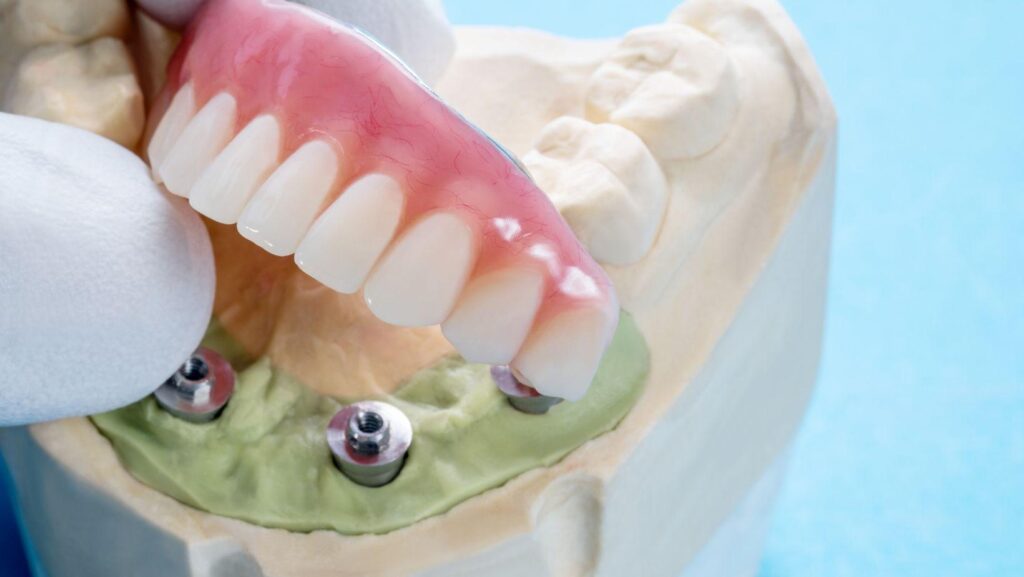
If you want to eat with less worry and more confidence, denture implants in Minot, ND usually give you a noticeably firmer bite and far fewer slips than traditional dentures.
Implant-supported options anchor to the jaw, so you can chew tougher foods and speak without constantly repositioning. Traditional dentures rely on suction and adhesives, which can loosen during meals.
This post breaks down how each type affects chewing force, comfort over time, and day-to-day maintenance.
You'll get clear comparisons about eating performance, how quickly you'll adapt, and what daily care looks like for each choice.
Understanding Denture Types
Let’s look at how construction and attachment impact fit, chewing force, and everyday comfort.
Materials, base design, and how the denture secures to your mouth all play a role in stability and the effort needed to eat and speak.
Key Differences in Materials and Design
Traditional dentures use an acrylic or nylon base that sits on your gums and depends on suction and adhesives.
The teeth are usually acrylic or porcelain—acrylic feels lighter and is gentler on opposing teeth, while porcelain lasts longer but can feel harder against your gums.
Implant-supported dentures attach to titanium implants in your jawbone.
Their base can be acrylic or something stronger, like metal-reinforced acrylic or zirconia for fixed options.
Since implants handle biting forces, these dentures use denser teeth and stiffer bases, transferring the load to bone instead of soft tissue.
Traditional dentures focus pressure on your gums and the bone underneath, which can make them sore during heavy chewing.
Implant-supported designs shift pressure to the implants and bone, easing sore spots and letting you bite more efficiently.
Overview of Attachment Methods
You’ve got two common implant attachment styles: overdentures (removable) and fixed hybrid dentures.
Overdentures snap onto 2–4 implants with locator or ball attachments; you can remove them for cleaning.
They improve retention and still let you access the denture for hygiene.
Fixed hybrid dentures screw onto 4–6 implants and stay in your mouth unless your dentist removes them.
They offer the highest stability and chewing efficiency but need good bone volume and a bit more complex maintenance around the implant sites.
Traditional dentures depend on suction, adhesives, and sometimes metal clasps for partials.
Adhesives help a bit with stability, but they won’t stop the denture from shifting sideways.
Your choice of attachment style should come down to bone health, budget, and how much chewing power you want.
Impacts on Eating Experience
You’ll notice changes in bite strength, what foods you can eat, and how well chewing matches up with speaking.
These differences affect daily meals, social dining, and even long-term nutrition.
Bite Force and Chewing Efficiency
Implant-supported dentures anchor to dental implants in your jaw, sending biting forces straight to bone.
That support usually restores a much stronger bite than traditional dentures, letting you tackle foods like apples or steak without the denture shifting.
With conventional dentures, your bite force mostly gets absorbed by the soft tissues and the denture base.
That means you’ll probably end up cutting food into smaller pieces or sticking with softer choices.
Chewing hard or fibrous foods can take more effort and leave you tired.
If you want predictable performance for tougher foods, implants give you a stronger, more stable platform.
Talk with your clinician about implant number and placement—they directly affect how much chewing power you get back.
Food Choices and Dietary Freedom
Implant-supported dentures let you eat a wider range of foods comfortably.
You can usually handle raw veggies, nuts, and meats with less worry about slippage or pain.
That makes it easier to get the protein, fiber, and nutrients you need.
Traditional dentures often force you to avoid crunchy, sticky, or hot foods to keep them from coming loose or causing soreness.
Over time, this can make meal planning a hassle and limit your food choices.
Implants cost more and require surgery, but they let you worry less about changing food textures or cooking methods.
If nutrition and enjoying your meals matter most, implant-retained options usually offer more freedom.
Speaking and Chewing Coordination
Eating and speaking share a lot of the same mouth movements, so denture stability matters.
Implant-supported dentures stay locked in place while you chew and talk, making it easier for your bite and tongue to coordinate naturally.
That means fewer interruptions like having to pause and reposition your denture.
Conventional dentures can move around during speech or chewing, which might make you take smaller bites, chew more times, or even eat alone to avoid embarrassment.
If you like to eat and chat at the same time, implants help keep your rhythm and timing between bites and words.
A good fit—whether implant or traditional—plus some practice can improve coordination, but implants usually need fewer adjustments to your habits.
Adaptation and Long-Term Comfort
You’ll face different adjustment periods and types of soreness depending on whether you go with implant-supported or traditional dentures.
Stability, bite force, and how much your soft tissue is involved all play into how quickly you get back to comfortable eating.
Adjustment Periods
With implant-supported dentures, you’ll usually get back most chewing function within 2–6 weeks after the final prosthesis goes in.
Healing from implant surgery takes 3–4 months, but once the denture attaches to healed implants, your bite force can feel almost natural pretty quickly.
You’ll start with soft proteins and gradually work up to firmer foods over several weeks.
Traditional dentures follow a different path.
You might need multiple relines or adjustments in the first 6–12 months as your jawbone and gums change shape.
Early on, chewing feels less stable, so you’ll want to avoid sticky or hard foods until you adapt.
Take small bites, cut food into manageable pieces, and chew slowly to retrain your muscles and build confidence.
Soreness and Tissue Irritation
Implant-supported dentures take pressure off your gums by sending chewing forces to bone.
You could feel some soreness around the implant sites after surgery for a few days or weeks.
If implants are well-placed, ongoing irritation isn’t common, but sometimes attachments or fit issues can cause inflammation—usually a quick visit to your clinician sorts it out.
Traditional dentures sit right on your gums and the bone beneath, so sore spots and ulcers are more likely, especially in the first months.
As bone shrinks, the fit changes and friction increases, leading to pain.
Expect occasional sore areas that need relining, smoothing, or a temporary soft liner.
Keep up with hygiene and let your dentist know about persistent pain, burning, or lumps to prevent infection and get relief faster.
Maintenance and Lifestyle Considerations
You’ll need to handle daily cleaning, regular dental visits, and the occasional adjustment.
Expect some differences in time, tools, and upkeep between implant-supported and traditional dentures.
Daily Cleaning and Care
For implant-supported dentures, take out any removable overdenture each night if it’s detachable.
Rinse it and brush with a non-abrasive denture brush and mild soap.
Clean around the implant abutments using a soft toothbrush and interdental brushes (0.45–1.0 mm) to clear away plaque.
Your dentist might recommend an antimicrobial mouthwash.
Traditional full dentures need nightly soaking in a denture-cleaning solution to loosen biofilm and stains.
Brush dentures daily outside your mouth with a denture brush and cleaner.
Clean your gums, tongue, and palate with a soft brush or cloth to cut down on irritation and odor.
Don’t use hot water or abrasive pastes for either type.
Here’s a quick checklist:
Longevity and Future Adjustments
Implant-supported dentures need ongoing care for the implants themselves, plus occasional tightening or swapping out of attachments like locators or bars. Usually, you'll have to replace these attachments every one to five years, depending on how much you use them.
Implants can actually last decades if you treat them right, but those little parts wear out faster. So, it's smart to set aside some money for new parts and plan for annual checkups, including X-rays.
Traditional dentures? They come with their own set of quirks. You'll probably need a reline or rebase every one to three years as your jawbone and gums shift, and replacing the whole set every five to eight years isn't unusual.
Adjustments are pretty much inevitable—maybe for sore spots, bite changes, or just to get a better fit. Getting relines done more often can really help cut down on ulcers and make chewing less of a hassle.
Don't skip those regular dental visits. Go at least once a year to check the fit, screen for any oral health issues, and keep an eye on bone changes that could affect your future options.